Inna lillahi wa inna ilayhi raji'un is the sentence Muslims reach for when bad news arrives. We hear it when someone passes away, but it is also said after a car accident, a lost job, a broken plan or a phone call we did not want to receive. It is short, and yet it carries a whole way of seeing the world.
Most Muslims know the words. Fewer know exactly what they mean, where they come from, or the dua the Prophet ﷺ taught us to say right after them. This guide goes through all of that, and ends with some practical advice on comforting people who are grieving and on helping children through loss.
What does Inna lillahi wa inna ilayhi raji'un mean?
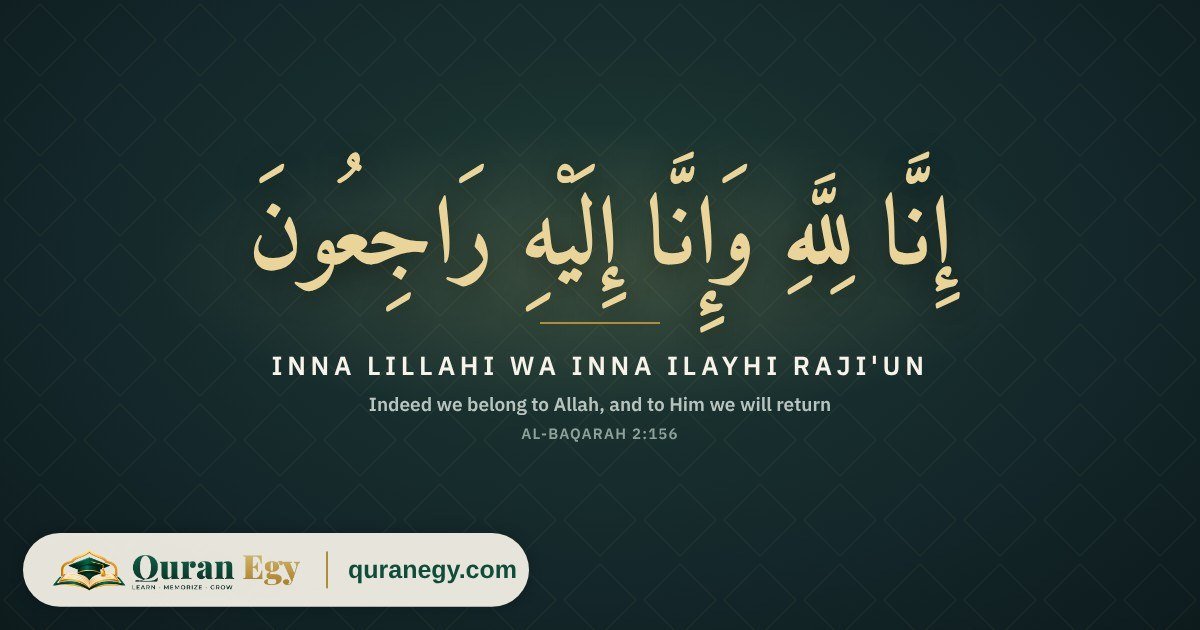
Inna lillahi wa inna ilayhi raji'un (إنا لله وإنا إليه راجعون) means "Indeed, we belong to Allah, and indeed, to Him we will return." Saying it is called istirja', from the same root as raji'un, "returning".
Here is the sentence word by word:
| Word | Arabic | Meaning |
|---|---|---|
| Inna | إنّا | indeed, we |
| Lillahi | لله | belong to Allah |
| Wa inna | وإنّا | and indeed, we |
| Ilayhi | إليه | to Him |
| Raji'un | راجعون | are returning |
You will see it spelled in many ways in English: Inna lillahi wa inna ilayhi rajiun, Innalillahi wainnailaihi rojiun, Inna lillah wa inna ilaihi raji'oon. They are all the same phrase.
The sentence has two halves, and each one answers a question that grief raises.
"We belong to Allah" answers the question whose was it? Our lives, our families, our health and our wealth were never truly ours. They were given to us for a time by their real Owner. When He takes something back, He is taking what was always His.
"To Him we will return" answers the question where is this going? The loss is not the end of the story. We will go back to Allah, and so will the people we have lost. There is a meeting ahead, and a reward for patience.
Where it comes from in the Quran
The phrase comes from Surah Al-Baqarah, in a passage about the tests every person will face:
وَلَنَبْلُوَنَّكُم بِشَيْءٍ مِّنَ الْخَوْفِ وَالْجُوعِ وَنَقْصٍ مِّنَ الْأَمْوَالِ وَالْأَنفُسِ وَالثَّمَرَاتِ ۗ وَبَشِّرِ الصَّابِرِينَ
And We will surely test you with something of fear and hunger and a loss of wealth and lives and fruits, but give good news to the patient. (Al-Baqarah 2:155)الَّذِينَ إِذَا أَصَابَتْهُم مُّصِيبَةٌ قَالُوا إِنَّا لِلَّهِ وَإِنَّا إِلَيْهِ رَاجِعُونَ
Those who, when a disaster strikes them, say: Indeed we belong to Allah, and indeed to Him we will return. (Al-Baqarah 2:156)أُولَٰئِكَ عَلَيْهِمْ صَلَوَاتٌ مِّن رَّبِّهِمْ وَرَحْمَةٌ ۖ وَأُولَٰئِكَ هُمُ الْمُهْتَدُونَ
Those are the ones upon whom are blessings from their Lord and mercy, and it is those who are the rightly guided. (Al-Baqarah 2:157)
Notice the order. Allah first tells us plainly that tests will come: fear, hunger, loss of money, loss of loved ones. Then He tells us what the patient say. Then He promises them three things: blessings from their Lord, mercy, and guidance. Very few deeds in the Quran are promised so much in a single verse.
The dua to say after it
The Prophet ﷺ taught a short dua to add after the istirja'. Umm Salamah, may Allah be pleased with her, reported that he said: "There is no Muslim who is struck by a calamity and says what Allah has commanded, Inna lillahi wa inna ilayhi raji'un, Allahumma'jurni fi musibati wakhluf li khayran minha, except that Allah will replace it for him with something better." (Sahih Muslim)
إِنَّا لِلَّهِ وَإِنَّا إِلَيْهِ رَاجِعُونَ، اللَّهُمَّ أْجُرْنِي فِي مُصِيبَتِي وَأَخْلِفْ لِي خَيْرًا مِنْهَا
Inna lillahi wa inna ilayhi raji'un. Allahumma'jurni fi musibati wakhluf li khayran minha.
Indeed we belong to Allah and to Him we will return. O Allah, reward me for my affliction and replace it for me with something better.
The story behind this hadith is one of the most moving in the Seerah. When Umm Salamah's husband, Abu Salamah, died, she remembered this dua. She said it, but inside she wondered: who could be better than Abu Salamah? He had been one of the first Muslims and a man she loved deeply. Still, she said the words in obedience. Some time later, the Prophet ﷺ himself proposed to her, and she became one of the Mothers of the Believers. Allah had replaced her loss with something she could never have imagined.
The lesson is not that every loss will be replaced in a way we can see in this life. The lesson is that the dua is a promise from the Prophet ﷺ, and that Allah's idea of "better" is wider than ours.
The reward of saying it with patience
A house called the House of Praise. The Prophet ﷺ said that when the child of a servant of Allah dies, Allah asks the angels: "Have you taken the child of My servant?" They say yes. He asks: "Have you taken the fruit of his heart?" They say yes. He asks: "What did My servant say?" They say: "He praised You and said Inna lillahi wa inna ilayhi raji'un." Allah says: "Build for My servant a house in Paradise, and name it the House of Praise." (Tirmidhi, graded hasan)
This hadith joins two phrases that every Muslim knows: Alhamdulillah and Inna lillahi. In the worst moment a parent can face, the believer praises Allah and returns the matter to Him, and the reward is a home in Paradise with a name of its own.
Patience is at the first strike. The Prophet ﷺ passed by a woman crying at a grave and told her to fear Allah and be patient. She did not recognise him and told him to leave her alone. When she later learned who he was, she came to apologise. He said: "Patience is at the first strike." (Sahih Al-Bukhari and Sahih Muslim)
In other words, the patience that counts most is the reaction in the first moments, before we have had time to think. That is exactly why Inna lillahi is worth learning deeply. When the shock comes, the right words are already there.
When to say Inna lillahi wa inna ilayhi raji'un
The verse talks about any calamity, so the phrase is not only for death. You can say it whenever something painful happens, large or small.
When you hear that someone has died
This is the most common use, whether the person is a close relative, a neighbour, a public figure or a Muslim you never met. It is a way of accepting Allah's decree and also a reminder that we will follow the same path.
When you lose something or something goes wrong
Losing money, failing an exam, a business deal falling through, a car breaking down, a loved one getting sick. Scholars mention that the istirja' is suitable for any harm that reaches a believer, even a small one, because every hardship is something we can be rewarded for if we meet it with patience.
When you remember an old loss
Grief comes back in waves. Saying the words again when an old pain returns is also a form of patience, and a way of handing the matter back to Allah.
Grief, tears and patience
Some people think that a "strong" Muslim should not cry. The Sunnah shows the opposite.
When the Prophet's young son Ibrahim was dying, the Prophet ﷺ wept. A companion was surprised, and the Prophet ﷺ said: "The eyes shed tears and the heart grieves, but we say only what pleases our Lord. And we are saddened by your departure, O Ibrahim." (Sahih Al-Bukhari)
So patience does not mean feeling nothing. It means:
- Allowing the tears and the sadness, because they are part of being human.
- Holding the tongue back from words of complaint against Allah.
- Holding the body back from actions of despair, such as wailing, tearing clothes or harming oneself.
- Saying what pleases Allah: Inna lillahi wa inna ilayhi raji'un.
If you are going through a loss right now, be gentle with yourself. Grief takes time. The words are not a switch that turns the pain off. They are a rope to hold on to while the pain does its work.
How to comfort someone who is grieving
When someone tells you about a death or a loss, Inna lillahi wa inna ilayhi raji'un is the natural first response. After that, here are some phrases and practices from the Sunnah and from Muslim tradition.
What the Prophet ﷺ said. When one of his daughters sent for him because her child was dying, he sent her this message: "To Allah belongs what He takes and to Him belongs what He gives, and everything with Him has an appointed time, so let her be patient and hope for reward." (Sahih Al-Bukhari and Sahih Muslim)
إِنَّ لِلَّهِ مَا أَخَذَ وَلَهُ مَا أَعْطَى، وَكُلُّ شَيْءٍ عِنْدَهُ بِأَجَلٍ مُسَمًّى، فَلْتَصْبِرْ وَلْتَحْتَسِبْ
Inna lillahi ma akhadha wa lahu ma a'ta, wa kullu shay'in 'indahu bi-ajalin musamma, faltasbir wal-tahtasib.
Common phrases of condolence:
- A'dham Allahu ajrak: may Allah make your reward great.
- Allahu yarhamuh (for a man) or Allahu yarhamha (for a woman): may Allah have mercy on him or her.
- Allah yasbirak: may Allah give you patience.
Practical comfort matters too. The Prophet ﷺ told his companions to prepare food for the family of Ja'far when news of his death arrived, "because something has come to them that keeps them busy." (Abu Dawud and Tirmidhi) Bringing a meal, helping with the children, or simply sitting with someone can say more than any speech.
A few things are best avoided: telling a grieving person to "get over it", comparing their loss to someone else's, or asking for details they may not want to share.
Helping children understand loss
Children notice when adults are sad, and they often have questions about death. The words Inna lillahi can give them a gentle frame.
- Explain the meaning simply. "Everything we have is a gift from Allah. When He takes something back, we say: we belong to Allah, and we will go back to Him."
- Teach it on small losses first. A broken toy, a lost game or a spilled drink are good moments to practise. When bigger losses come, the words are already familiar.
- Let them see your feelings. It is fine for children to see a parent cry and then say Inna lillahi. They learn that faith and sadness can live together.
- Share the story of Umm Salamah. Children love stories, and this one shows that Allah can replace a loss with something good.
If you would like your child to learn the daily duas and adhkar, including the dua of Umm Salamah, with their meanings, our Duas and Adhkar course teaches them in short one-to-one classes. Our Quran classes for kids also include short lessons on Islamic manners and the stories of the Prophets and Companions.
Pronunciation tips
A few sounds in this phrase are worth practising:
- Inna has a doubled n. Hold it slightly: in-na, not ina.
- Lillahi has a doubled l, and the l in Allah is light here because it comes after the "i" sound of li.
- Raji'un contains the letter ع ('ayn), a sound from the middle of the throat. The apostrophe in raji'un marks it. It is easy to drop, but a teacher can help you hear and produce it in a few minutes.
Our online Tajweed course covers the throat letters in its first level. You might also like our guides to the meaning of Alhamdulillah and the meaning of Assalamualaikum, two other phrases Muslims say every day.
Azhari-trained teachers · male & female · kids and adults
Frequently asked questions
What does Inna lillahi wa inna ilayhi raji'un mean in English?
It means "Indeed, we belong to Allah, and indeed, to Him we will return." It comes from Surah Al-Baqarah, verse 156.
When should I say Inna lillahi wa inna ilayhi raji'un?
Whenever a calamity happens, large or small. That includes hearing of a death, but also illness, losing money or property, or any painful news.
Is it only said when someone dies?
No. The verse speaks of any disaster, and scholars mention that it fits every kind of hardship a believer faces.
What dua is said after it?
Allahumma'jurni fi musibati wakhluf li khayran minha: "O Allah, reward me for my affliction and replace it for me with something better." The Prophet ﷺ taught it, as reported in Sahih Muslim.
What is the reward for saying it?
Allah promises blessings, mercy and guidance to those who say it with patience (Al-Baqarah 2:157). A hadith in Tirmidhi also describes a house in Paradise called the House of Praise for a parent who loses a child and responds with praise and istirja'.
Is it wrong to cry when someone dies?
No. The Prophet ﷺ wept when his son Ibrahim died, and said that the eyes shed tears and the heart grieves, but we say only what pleases our Lord.
What should I say to someone who has lost a loved one?
Start with Inna lillahi wa inna ilayhi raji'un, then you can say A'dham Allahu ajrak (may Allah make your reward great) and make dua for the person who passed away. Practical help, like bringing food, is also part of the Sunnah.