Assalamualaikum is the first thing most Muslims say to each other. We say it at the door, on the phone, at the start of a message, when we walk into the mosque and when we leave a gathering. Muslims in Jakarta, Lagos, London and Cairo may not share a single language, but they all share this greeting.
Because we use it so often, it can turn into a sound we make without thinking, like "hi". This guide looks at it more closely: what the words mean, how to reply, what the Quran and the Sunnah say about it, and how to help children say it with meaning.
What does Assalamualaikum mean?
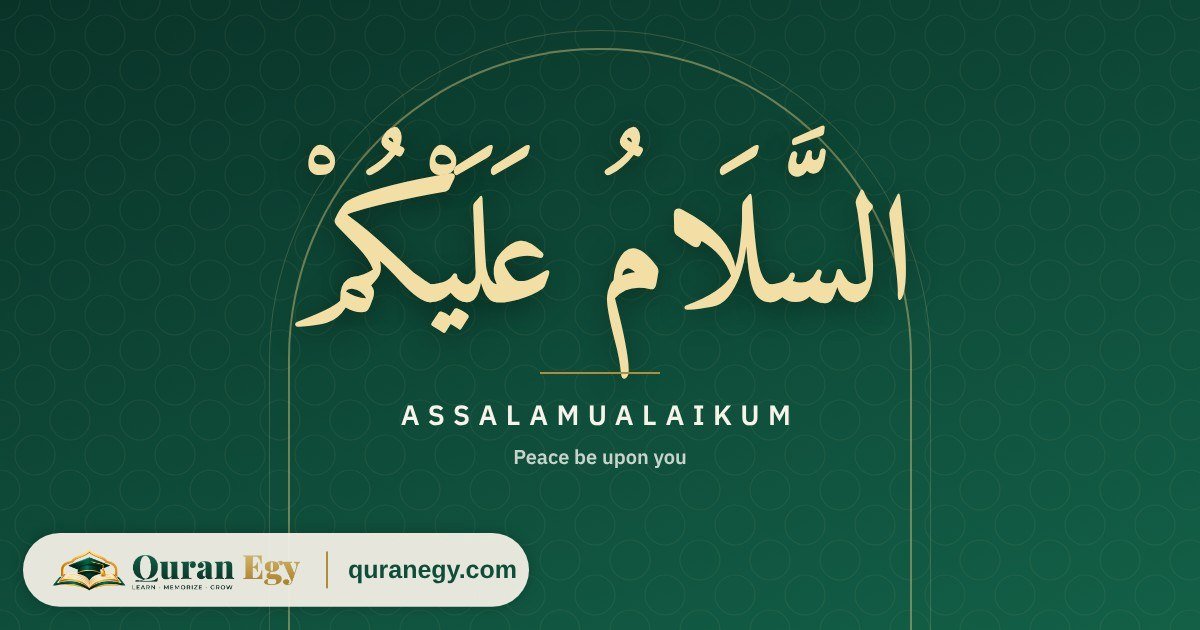
Assalamualaikum (السلام عليكم) means "peace be upon you". You will also see it written as As-salamu alaykum, Assalamu alaikum, Salam alaikum or simply Salam. They are all the same greeting.
It has three parts:
| Part | Arabic | Meaning |
|---|---|---|
| As | الـ | "the", the peace that is complete |
| Salam | سلام | peace, safety, being free from harm |
| Alaikum | عليكم | upon you |
The word salam is richer than the English word "peace". It includes safety, wellbeing and protection from every kind of harm. So when you greet someone with it, you are really praying for them: may you be safe, may no harm reach you, from me or from anything else.
Alaikum is the plural "you". Even when you greet one person, the plural is normally used. Scholars mention that this includes the person and the angels who are with them, and it also carries a sense of respect.
As-Salam: a name of Allah
As-Salam is one of the names of Allah. The Quran says:
هُوَ اللَّهُ الَّذِي لَا إِلَٰهَ إِلَّا هُوَ الْمَلِكُ الْقُدُّوسُ السَّلَامُ
He is Allah, other than whom there is no god, the King, the Pure, the Source of Peace. (Al-Hashr 59:23)
That gives the greeting a deeper meaning. You are not only wishing someone peace. You are reminding both of you of the One who is Peace and who gives it.
The full greeting and how to reply
There are three common forms of the greeting, each longer than the one before:
- Assalamu alaikum: peace be upon you.
- Assalamu alaikum wa rahmatullah: peace be upon you, and the mercy of Allah.
- Assalamu alaikum wa rahmatullahi wa barakatuh: peace be upon you, and the mercy of Allah and His blessings.
The reply turns the words around:
وَعَلَيْكُمُ السَّلَامُ وَرَحْمَةُ اللَّهِ وَبَرَكَاتُهُ
Wa alaikum assalam wa rahmatullahi wa barakatuh.
And upon you be peace, and the mercy of Allah and His blessings.
The Quran tells us how to answer a greeting:
وَإِذَا حُيِّيتُم بِتَحِيَّةٍ فَحَيُّوا بِأَحْسَنَ مِنْهَا أَوْ رُدُّوهَا
And when you are greeted with a greeting, greet in return with one better than it, or at least return it equally. (An-Nisa 4:86)
So if someone says Assalamu alaikum, you can reply Wa alaikum assalam wa rahmatullah, which is better. If they say the full greeting, you return the full greeting. Replying with less than you received is not the way the Quran teaches.
Scholars explain that starting the greeting is a Sunnah, while replying to it is an obligation. If one person in a group replies, that is enough for the group, though it is better for everyone to answer.
The reward of saying salam
Ten, twenty, thirty. A man came to the Prophet ﷺ and said Assalamu alaikum. The Prophet ﷺ replied and said: "Ten." Another came and said Assalamu alaikum wa rahmatullah. He replied and said: "Twenty." A third came and said Assalamu alaikum wa rahmatullahi wa barakatuh. He replied and said: "Thirty." (Abu Dawud and Tirmidhi, graded hasan)
In other words, each extra phrase adds ten good deeds. A few extra seconds at the door can multiply your reward three times.
It is a path to Paradise. The Prophet ﷺ said: "You will not enter Paradise until you believe, and you will not believe until you love one another. Shall I not tell you of something that, if you do it, you will love one another? Spread salam among yourselves." (Sahih Muslim)
This hadith links three things together: salam leads to love, love is part of faith, and faith leads to Paradise. A simple greeting sits at the start of that chain.
It is among the best deeds in Islam. A man asked the Prophet ﷺ which deeds in Islam are best. He said: "That you feed people, and that you greet with salam those you know and those you do not know." (Sahih Al-Bukhari and Sahih Muslim)
Greeting people you don't know is the part many of us forget. We greet friends and family, but walk past other Muslims in silence. The Sunnah asks us to widen the circle.
The one who greets first is closest to Allah. The Prophet ﷺ said: "The people closest to Allah are those who start the greeting of salam." (Abu Dawud)
Where the greeting comes from
Assalamualaikum is not a cultural habit that Muslims picked up along the way. It goes back to the very first human being.
The Prophet ﷺ said that when Allah created Adam, He told him to go and greet a group of angels and listen to how they replied, because that would be his greeting and the greeting of his children. Adam said Assalamu alaikum, and they replied Assalamu alaika wa rahmatullah, adding wa rahmatullah. (Sahih Al-Bukhari and Sahih Muslim)
It is also the greeting of Paradise. The Quran describes the people of Paradise:
وَتَحِيَّتُهُمْ فِيهَا سَلَامٌ
And their greeting therein will be: Peace. (Yunus 10:10)
So salam is how humanity's story began, and it is how the believers will greet each other at the end.
Who should greet first?
The Sunnah gives a simple order of manners. The Prophet ﷺ said: "The rider greets the one walking, the one walking greets the one sitting, and the small group greets the large group." (Sahih Al-Bukhari and Sahih Muslim) In another narration: "The young greets the old." (Sahih Al-Bukhari)
The idea behind this is humility. The one who has more, or is moving, or is fewer in number, takes the first step. But this is about what is best, not a rule that stops anyone. If the older person greets first, that is still good, and the Prophet ﷺ himself used to greet children when he passed them.
When to say Assalamualaikum
You can greet any Muslim at any time it is appropriate. The Sunnah mentions some moments in particular.
When you meet another Muslim
Among the rights of one Muslim over another, the Prophet ﷺ listed: "When you meet him, greet him with salam." (Sahih Muslim)
When you enter your home
فَإِذَا دَخَلْتُم بُيُوتًا فَسَلِّمُوا عَلَىٰ أَنفُسِكُمْ تَحِيَّةً مِّنْ عِندِ اللَّهِ مُبَارَكَةً طَيِّبَةً
But when you enter houses, greet one another with a greeting from Allah, blessed and good. (An-Nur 24:61)
Many families make this the first thing anyone says when they come through the door. Scholars mention that even if the house is empty, you can still say Assalamu alaina wa 'ala 'ibadillahis-salihin: peace be upon us and upon the righteous servants of Allah.
When you visit someone else's home
The Quran tells believers not to enter other people's houses until they ask permission and greet the people inside (An-Nur 24:27). The salam at the door is part of good manners, not an extra.
When you join and leave a gathering
The Prophet ﷺ said: "When one of you comes to a gathering, let him say salam. And when he wants to leave, let him say salam. The first is not more important than the last." (Abu Dawud and Tirmidhi)
We usually remember the first salam and forget the second one. Leaving with salam ends the meeting on a kind note.
At the end of every prayer
Every prayer ends with Assalamu alaikum wa rahmatullah, turning to the right and then to the left. So a Muslim who prays five times a day says it at least ten times a day in prayer alone.
Assalamualaikum in messages and online
Today, much of our greeting happens on WhatsApp, email and social media. A few simple points help:
- Write it in full when you can. Short forms like "AOA" or "slm" are common, but many scholars encourage writing the greeting fully, because it is a dua and not a code.
- Reply in writing, too. A written salam deserves a written reply, such as Wa alaikum assalam.
- Don't let it become a formality. If the message is harsh or rude after the greeting, the greeting loses its meaning. Let the salam set the tone of what follows.
Common mistakes to avoid
- Saying it too fast. Rushed greetings sometimes come out as "salamu-kum" or "sa'laykum". Saying the words clearly is part of respecting them.
- Replying with less. Answering a full greeting with only "salam" goes against the guidance of An-Nisa 4:86.
- Only greeting people we know. The hadith praises greeting people you know and people you don't know.
- Replacing it with "hi". There is nothing wrong with friendly words after the greeting, but they are not a substitute for it.
How to answer when a non-Muslim says salam
Sometimes a non-Muslim colleague or neighbour greets a Muslim with Assalamualaikum out of kindness. Scholars have discussed how to respond. A common approach, based on hadith in Al-Bukhari and Muslim, is to reply with Wa alaikum (and upon you), and many scholars say that if the greeting is clearly sincere, replying with peace in return is fine too. Either way, the Quranic principle of answering kindness with kindness applies. If you are unsure, ask a scholar you trust.
Teaching Assalamualaikum to children
Children learn this greeting very early, often before they can say full sentences. The challenge is to help them understand it and use it with warmth.
A few ideas that work at home:
- Greet your children first. The Prophet ﷺ greeted children, and when a parent says salam to a child every morning, the child learns that the greeting is for everyone, not only for adults.
- Make the front door a salam point. Everyone who comes home says salam, and everyone inside replies. It quickly becomes a family habit.
- Teach the "ten, twenty, thirty" hadith. Kids love counting rewards. Let them add wa rahmatullah and wa barakatuh and count how many good deeds they earned.
- Explain the meaning simply. Tell a young child: "When you say salam, you are asking Allah to keep that person safe." It turns the word into a small act of care.
- Practise the reply. Many children know how to say the greeting but get stuck on the reply. Play a quick game where you greet them in different ways and they answer correctly.
If you want your child to learn the daily duas and adhkar with their meanings, our Duas and Adhkar course covers the greeting, the duas for entering and leaving the home, and many more, in short one-to-one classes. Our Quran classes for kids also include short lessons on Islamic manners as children progress.
Spelling and pronunciation
There is no single official English spelling, because English letters cannot match every Arabic sound. Assalamualaikum and Assalamu alaikum are the most common forms. As-salamu alaykum is closer to the Arabic.
Two sounds are worth getting right:
- The ع in alaikum is a letter from the middle of the throat. It is not the same as the English "a", and a teacher can help you hear the difference in a few minutes.
- The lam in as-salam is doubled when you join the words: as-sa-laa-mu, with a slightly longer "aa".
Our online Tajweed course covers the throat letters in its first level, and if you want to understand greetings and everyday phrases more deeply, our Arabic language course is a good place to start. You might also like our guide to the meaning of Alhamdulillah, another phrase we say every day.
Certified Al-Azhar teachers · male & female · kids and adults
Frequently asked questions
What does Assalamualaikum mean in English?
It means "peace be upon you". The word salam also includes safety and protection from harm, so it is a short prayer for the person you greet.
How do you reply to Assalamualaikum?
Say Wa alaikum assalam, which means "and upon you be peace". It is better to add wa rahmatullahi wa barakatuh, especially if the person greeted you with the full form.
What is the full form of the greeting?
Assalamu alaikum wa rahmatullahi wa barakatuh: peace be upon you, and the mercy of Allah and His blessings.
What is the reward for saying salam?
The Prophet ﷺ counted ten good deeds for Assalamu alaikum, twenty when wa rahmatullah is added, and thirty for the full greeting. He also said that spreading salam leads to love between believers.
Is replying to salam obligatory?
Starting the greeting is a Sunnah, and replying is an obligation. In a group, one person's reply is enough, though it is better for everyone to answer.
Who should say salam first?
The rider greets the walker, the walker greets the one sitting, the smaller group greets the larger one, and the younger greets the older. Whoever starts first is described as the closest to Allah.
Can I write "AOA" instead of Assalamualaikum?
Many people do, but it is better to write the greeting in full, because it is a dua with a reward, not just a word of hello.