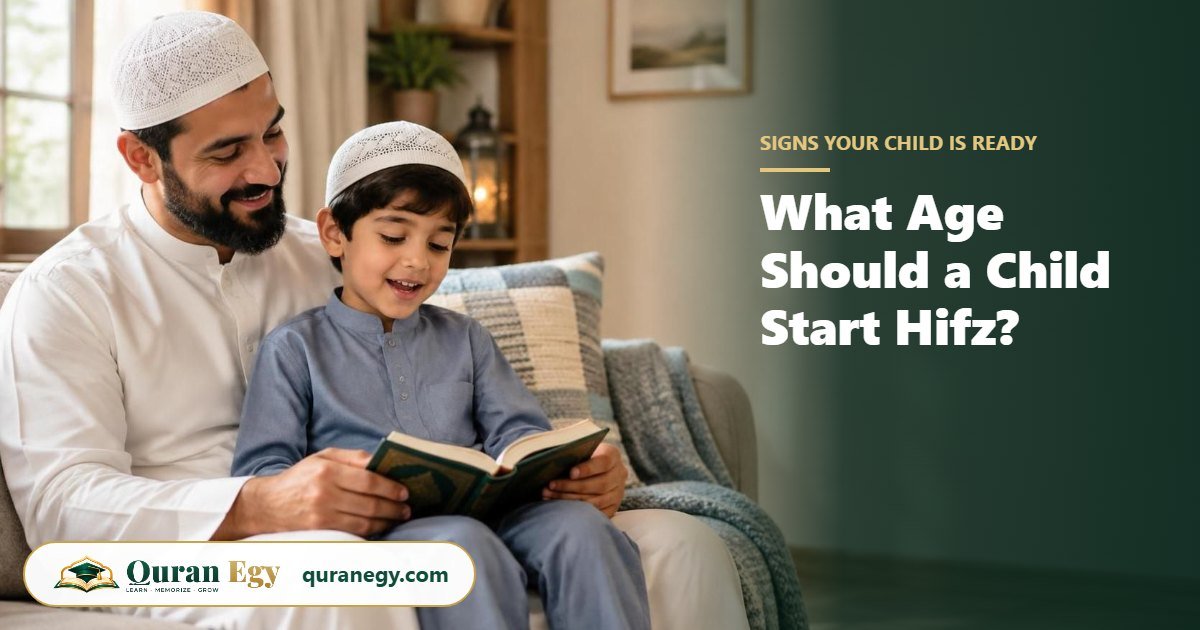
Most children can start memorizing short surahs at around 4 to 5, and many are ready for a structured Hifz plan between 7 and 10, once they read the Quran fluently. Age is only a rough guide. A child is ready for real Hifz when they can sit and focus for 20 minutes, read Arabic letters correctly, and enjoy reciting. Starting earlier with listening and short surahs is good; pushing a full Hifz plan on a child who cannot read yet usually backfires.
This guide explains what Hifz looks like at each age and how to tell if your child is ready.
Key takeaways
- Ages 3 to 5: listen and repeat short surahs, no pressure.
- Ages 5 to 7: learn to read with Noorani Qaida while memorizing Juz Amma by listening.
- Ages 7 to 10: the most common age for a structured Hifz plan.
- Ages 11 and up: faster memorization and better understanding, but less free time.
- Readiness beats age: focus, reading level and motivation matter most.
Hifz is not the same as learning to read
Parents often mix up two goals. Learning to read the Quran means decoding the letters and vowels correctly, usually with a book like Noorani Qaida. Hifz means memorizing the Quran and keeping it with regular revision. Our guide on what age to start learning the Quran covers reading. This article is about Hifz.
The two overlap. Young children often memorize short surahs by listening before they can read. But serious Hifz goes much better once a child reads well, because they can check the text themselves and revise without a teacher next to them.
Age-by-age guide
| Age | What works | Daily new amount | Daily time |
|---|---|---|---|
| 3 to 4 | Listening and repeating with a parent | 1 short ayah | 5 to 10 minutes |
| 5 to 6 | Short surahs by listening, start Noorani Qaida | 1 to 2 short ayat | 10 to 15 minutes |
| 7 to 9 | Structured Hifz once reading is fluent | 2 to 5 lines | 20 to 30 minutes |
| 10 to 12 | Steady Hifz with daily revision | 5 lines to half a page | 30 to 45 minutes |
| 13 to 15 | Faster pace, more understanding | Half a page to 1 page | 45 to 60 minutes |
These are typical ranges, not targets. Some 6-year-olds memorize quickly, and some 12-year-olds need more time. Revision time is included.
Signs your child is ready for Hifz
- They can focus for 15 to 20 minutes without getting restless.
- They read Arabic letters and vowels correctly, or are close to finishing the Qaida.
- They already know a few short surahs, such as Al-Fatiha, Al-Ikhlas and An-Nas.
- They enjoy reciting, or at least do not resist it.
- They can repeat a line after hearing it a few times.
- You can give 10 minutes a day at home for revision with them.
If most of these are true, your child is probably ready. If not, keep going with reading and short surahs. Readiness often arrives in a few months.
Why starting too early can backfire
A child who is pushed into long daily sessions before they are ready can start to dislike the Quran. Signs of pressure include tears before class, "forgetting" class times, and rushing through recitation. If you see these, reduce the amount, shorten the session and add more praise. A child who loves 3 lines a day will go further than one who dreads a page.
Why starting later is fine
Many parents worry that they "missed" the best age. You did not. Older children understand what they memorize, plan better and often memorize faster per session. Teenagers and adults finish Hifz every year. Our article on how long it takes to memorize the Quran shows timelines at every pace.
A simple first-year plan for a 7 to 9 year old
| Months | Goal |
|---|---|
| 1 to 2 | Finish reading foundations, revise known short surahs |
| 3 to 6 | Memorize from An-Nas back to At-Takathur |
| 7 to 9 | Continue to Al-Fajr, with weekly revision of all earlier surahs |
| 10 to 12 | Finish Juz Amma, test with the teacher |
Juz Amma first is the usual order because the surahs are short and the child uses them in prayer. Our list of the best surahs to memorize explains more. You can also track progress with our free Juz Amma memorization tracker.
How parents can help at home
- Listen to one surah a day in the car or before bed, from a clear reciter.
- Revise for 5 to 10 minutes after dinner, not just before class.
- Celebrate milestones: a finished surah, a finished page, a finished Juz'.
- Let your child lead prayer at home with the surahs they know.
- Stay in touch with the teacher and read the monthly report.
Hifz for kids at Quran Egy
In our Quran memorization program, children study one-to-one with patient Azhari-trained teachers, starting with a check of their reading. If they are not ready yet, the teacher starts with the Noorani Qaida course and short surahs, then moves into Hifz. Younger children usually have 20 to 30 minute classes, and parents get a monthly progress report. Every child gets a certificate after passing the test for each Juz'. See all options in our Quran classes for kids, with plans from $40 a month.
A free class with a teacher who checks reading and readiness
Frequently asked questions
What is the best age to start Hifz?
Many children start structured Hifz between 7 and 10, after they can read the Quran fluently. Short surahs can start from about 4 or 5.
Can a 4-year-old memorize the Quran?
A 4-year-old can memorize short surahs by listening and repeating. A full Hifz plan usually comes later, once the child reads well.
Is 12 too late to start Hifz?
No. Older children often memorize faster per session and understand more. Many start at 12 or later and finish.
How much should a child memorize each day?
From 1 short ayah at age 4 to half a page or more for teenagers. Quality and revision matter more than amount.
Should my child learn to read before starting Hifz?
Yes, for structured Hifz. Reading lets the child check the text and revise alone, which prevents mistakes.
How long does it take a child to memorize Juz Amma?
Many children memorize Juz Amma in 6 to 12 months with short daily practice and regular classes.