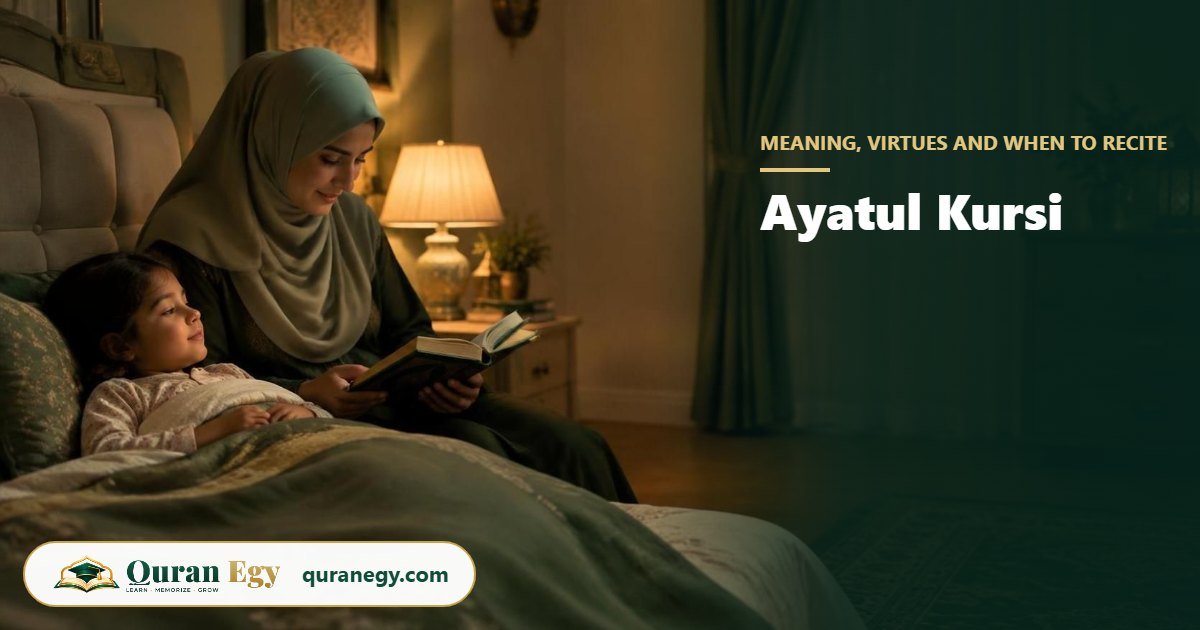
Ayatul Kursi is verse 255 of Surah Al-Baqarah, and the Prophet ﷺ called it the greatest verse in the Book of Allah. Many Muslims recite it after every prayer and before sleeping, and it is often one of the first long verses parents teach their children after the short surahs.
Below you will find the full Arabic text, a transliteration, a clear English meaning sentence by sentence, the benefits that come from authentic hadith, the tajweed points students most often get wrong, and a simple seven-day plan to memorize it.
Key takeaways
- Ayatul Kursi is Surah Al-Baqarah, verse 255. It has 10 sentences and about 50 words.
- The Prophet ﷺ called it the greatest verse in the Quran (Sahih Muslim).
- Recited before sleep, a guardian from Allah stays with you until morning (Sahih al-Bukhari).
- Recited after each obligatory prayer, "nothing prevents him from entering Paradise except death" (An-Nasa'i, graded sahih).
- Most students can memorize it in 5 to 7 days at one sentence or two a day.
Ayatul Kursi in Arabic
اللَّهُ لَا إِلَٰهَ إِلَّا هُوَ الْحَيُّ الْقَيُّومُ ۚ لَا تَأْخُذُهُ سِنَةٌ وَلَا نَوْمٌ ۚ لَّهُ مَا فِي السَّمَاوَاتِ وَمَا فِي الْأَرْضِ ۗ مَن ذَا الَّذِي يَشْفَعُ عِندَهُ إِلَّا بِإِذْنِهِ ۚ يَعْلَمُ مَا بَيْنَ أَيْدِيهِمْ وَمَا خَلْفَهُمْ ۖ وَلَا يُحِيطُونَ بِشَيْءٍ مِّنْ عِلْمِهِ إِلَّا بِمَا شَاءَ ۚ وَسِعَ كُرْسِيُّهُ السَّمَاوَاتِ وَالْأَرْضَ ۖ وَلَا يَئُودُهُ حِفْظُهُمَا ۚ وَهُوَ الْعَلِيُّ الْعَظِيمُ
Transliteration:Allahu la ilaha illa huwal-Hayyul-Qayyum. La ta'khudhuhu sinatun wa la nawm. Lahu ma fis-samawati wa ma fil-ard. Man dhal-ladhi yashfa'u 'indahu illa bi-idhnih. Ya'lamu ma bayna aydihim wa ma khalfahum. Wa la yuhituna bi shay'im-min 'ilmihi illa bima sha'. Wasi'a kursiyyuhus-samawati wal-ard. Wa la ya'uduhu hifzuhuma. Wa huwal-'Aliyyul-'Azim.
Transliteration helps at the start, but it cannot show sounds like ḥ, 'ayn and ẓ correctly. Use it as a bridge, and listen to a teacher or a trusted reciter. You can follow the verse with audio on Quran.com.
Meaning of Ayatul Kursi, sentence by sentence
| # | Arabic | Meaning |
|---|---|---|
| 1 | اللَّهُ لَا إِلَٰهَ إِلَّا هُوَ | Allah: there is no god except Him, |
| 2 | الْحَيُّ الْقَيُّومُ | the Ever-Living, the Sustainer of all existence. |
| 3 | لَا تَأْخُذُهُ سِنَةٌ وَلَا نَوْمٌ | Neither drowsiness nor sleep overtakes Him. |
| 4 | لَّهُ مَا فِي السَّمَاوَاتِ وَمَا فِي الْأَرْضِ | To Him belongs whatever is in the heavens and whatever is on the earth. |
| 5 | مَن ذَا الَّذِي يَشْفَعُ عِندَهُ إِلَّا بِإِذْنِهِ | Who could intercede with Him except by His permission? |
| 6 | يَعْلَمُ مَا بَيْنَ أَيْدِيهِمْ وَمَا خَلْفَهُمْ | He knows what is before them and what will be after them, |
| 7 | وَلَا يُحِيطُونَ بِشَيْءٍ مِّنْ عِلْمِهِ إِلَّا بِمَا شَاءَ | and they grasp nothing of His knowledge except what He wills. |
| 8 | وَسِعَ كُرْسِيُّهُ السَّمَاوَاتِ وَالْأَرْضَ | His Kursi extends over the heavens and the earth, |
| 9 | وَلَا يَئُودُهُ حِفْظُهُمَا | and guarding them does not tire Him. |
| 10 | وَهُوَ الْعَلِيُّ الْعَظِيمُ | He is the Most High, the Most Great. |
What is the Kursi? The word kursi (كرسي) literally means a footstool or seat. Ibn Abbas explained it as "the place of the two feet", and scholars distinguish it from the 'Arsh (the Throne), which is greater still. The verse uses it to show how vast Allah's dominion is: the heavens and the earth fit within it, and guarding them costs Him no effort.
Notice how every sentence describes Allah. There is no command, no story and no ruling in the verse. It is pure tawhid, which is why scholars explain it as the greatest verse.
Benefits of Ayatul Kursi from authentic hadith
The greatest verse. The Prophet ﷺ asked Ubayy ibn Ka'b which verse in the Book of Allah was the greatest. Ubayy answered: "Allahu la ilaha illa huwal-Hayyul-Qayyum." The Prophet ﷺ struck his chest and said: "May knowledge be pleasing to you, O Abu al-Mundhir!" (Sahih Muslim)
Protection before sleep. Abu Hurairah was guarding the zakah food when a thief came three nights in a row. On the third night the thief said: "When you go to bed, recite Ayatul Kursi. A guardian from Allah will remain with you, and no devil will come near you until morning." The Prophet ﷺ said: "He told you the truth, though he is a liar. That was a devil." (Sahih al-Bukhari 2311)
After every obligatory prayer. "Whoever recites Ayatul Kursi after every prescribed prayer, nothing prevents him from entering Paradise except death." (An-Nasa'i in as-Sunan al-Kubra, graded sahih by al-Albani)
Part of the morning and evening adhkar. Many scholars include it in the daily adhkar because of these narrations, along with the last three surahs.
When to recite Ayatul Kursi
| Time | How often | Source |
|---|---|---|
| After each obligatory prayer | once | An-Nasa'i |
| Before sleeping | once | Sahih al-Bukhari |
| Morning and evening adhkar | once | recommended by scholars |
| In ruqyah for yourself or your family | as needed | widely practised by scholars |
Tajweed notes: where students often slip
Ayatul Kursi is a good verse to practise tajweed because it has many noon sakinah and tanween rules close together:
| Word | Rule | What to do |
|---|---|---|
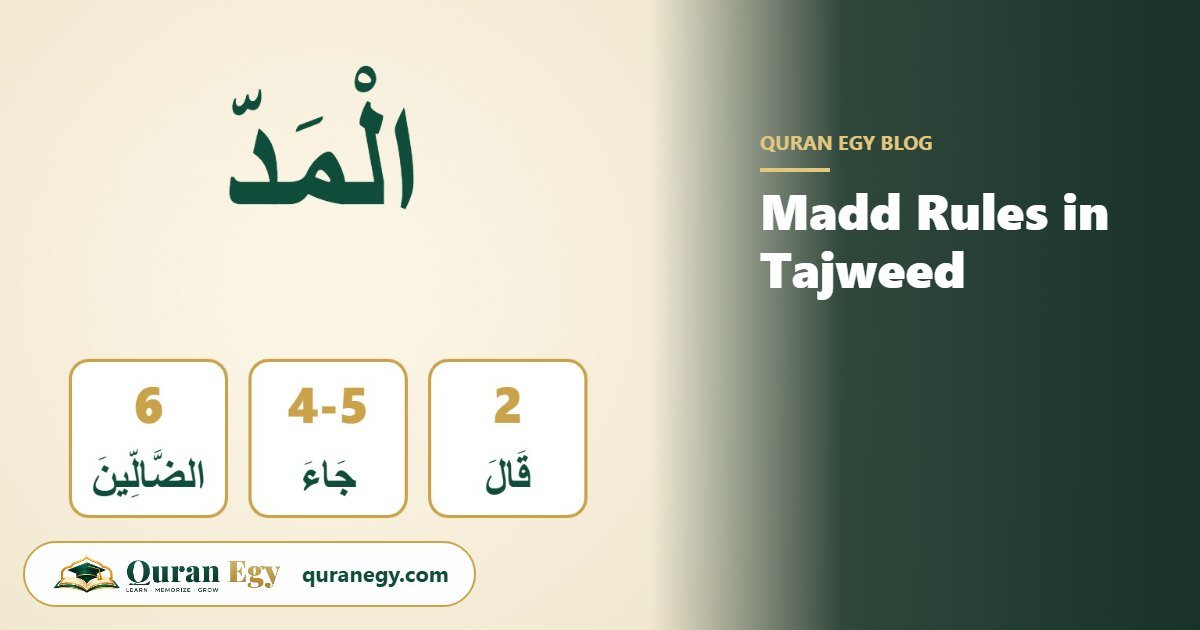
| لَا إِلَٰهَ إِلَّا | Madd munfasil and madd tabi'i | Stretch la before the hamza 4 or 5 counts in Hafs |
| سِنَةٌ وَلَا | Idgham with ghunnah | Merge the tanween into the waw with a nasal sound |
| نَوْمٌ ۚ لَّهُ | Idgham without ghunnah (when joined) | Merge the tanween into the lam with no nasal sound |
| مَن ذَا | Ikhfa | Hide the noon with a light ghunnah before dhal |
| عِندَهُ | Ikhfa | Hide the noon before dal |
| بِشَيْءٍ مِّنْ | Idgham with ghunnah | Merge the tanween into the meem |
| مِّنْ عِلْمِهِ | Izhar | Pronounce the noon clearly before 'ayn |
| الْحَيُّ | Heavy ḥa | Breathy ḥ from the middle of the throat, not "h" |
If these terms are new to you, start with our Tajweed rules for beginners, then practise with a teacher in our online Tajweed course. A teacher will catch mistakes you cannot hear in your own recitation.
How to memorize Ayatul Kursi in 7 days
This plan works for adults and for children aged about 7 and up. Each day takes 10 to 15 minutes.
| Day | New part | Review |
|---|---|---|
| 1 | Sentences 1-3: Allahu la ilaha... wa la nawm | — |
| 2 | Sentences 4-5: Lahu ma fis-samawati... illa bi-idhnih | Day 1 |
| 3 | Sentences 6-7: Ya'lamu... illa bima sha' | Days 1-2 |
| 4 | Sentences 8-10: Wasi'a kursiyyuhu... al-'Azim | Days 1-3 |
| 5 | No new part | Whole verse 5 times, slowly, from the mushaf |
| 6 | No new part | Whole verse from memory after each prayer |
| 7 | No new part | Recite it to a teacher or parent, fix any mistakes |
Tips that make it stick:
- Learn the meaning of each sentence first. It is much easier to remember "He does not sleep, so everything is His, so no one intercedes without permission" than ten strings of sounds.
- Use it right away. Recite it after Fajr and before sleep from Day 1, even the part you know. Using it daily is the best revision.
- Listen before you sleep. Hearing the full verse a few times each night helps the order of sentences settle.
- For children, track it. Our free Hifz Tracker for kids lets you add it and mark each day's review.
Once Ayatul Kursi is solid, the last two verses of Al-Baqarah are a natural next step. Our list of the best surahs to memorize suggests what to learn after that.
Memorize it with a teacher
Memorizing alone is possible, but most students make two or three small mistakes they do not notice for years, often in the madd or the ghunnah. In our online Quran memorization course, a teacher listens to every part you memorize, corrects it on the spot, and builds a review plan for you. Many students start with Ayatul Kursi and the short surahs, then move to whole juz'. Children learn it in our Quran classes for kids, and it is also part of the Duas and Adhkar course.
If you want to see how a lesson works, book a free trial and recite Ayatul Kursi to your teacher in the first class. You will leave with a clear plan for what to memorize next in the memorization course.
Azhari-trained teachers · male & female · kids and adults
Frequently asked questions
Which surah is Ayatul Kursi in?
Surah Al-Baqarah, the second surah of the Quran. It is verse 255, in the third juz'.
Why is it called Ayatul Kursi?
Because it mentions the Kursi of Allah: "His Kursi extends over the heavens and the earth."
What are the benefits of reciting Ayatul Kursi before sleep?
A guardian from Allah stays with you and no devil comes near you until morning (Sahih al-Bukhari).
Is Ayatul Kursi the greatest verse in the Quran?
Yes. The Prophet ﷺ confirmed this to Ubayy ibn Ka'b (Sahih Muslim).
How long does it take to memorize Ayatul Kursi?
Most people can memorize it in 5 to 7 days, learning one or two sentences a day and reviewing the earlier parts.
Can I recite Ayatul Kursi without wudu?
Yes. Reciting from memory without wudu is allowed. Touching a printed mushaf without wudu is a matter scholars discuss, and many require wudu for it.